The Tetris Effect
The aim was to create an artwork based on a 20€ bill sent by the organizers of the festival.
The European Central Bank launched in February 2015 an online Tetris game to promote the new 20€ bill which will be put into circulation by the end of the year. The game is a playful way to discover the security measures put into place to protect the new bill. Each finished level reveals a new security measure.
Scientists have observed “The Tetris Effect” on players. A prolonged exposure to the game can provoke an alteration in thought patterns and environmental observations. A player will eventually recognize Tetris shapes in the real world, and will imagine how elements of the world around him can fit together.
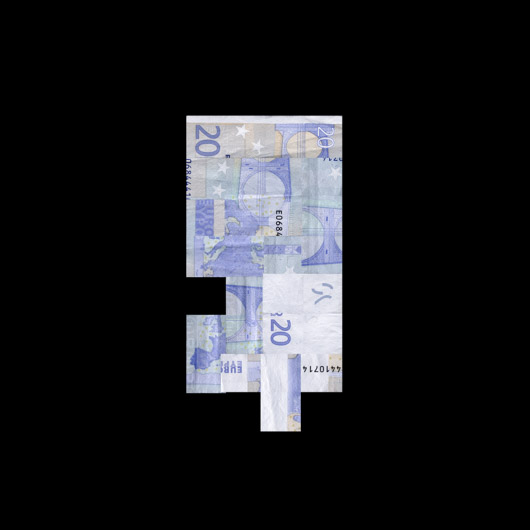
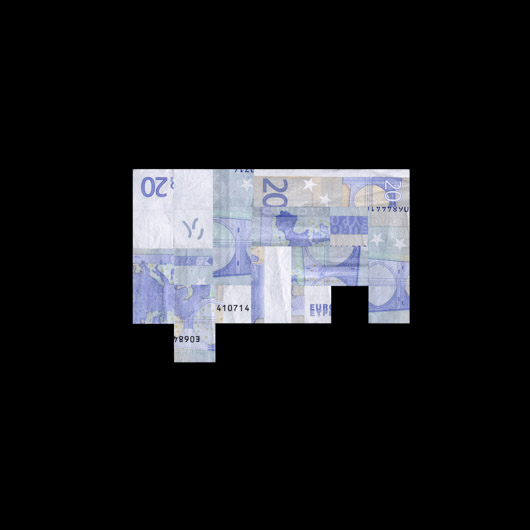
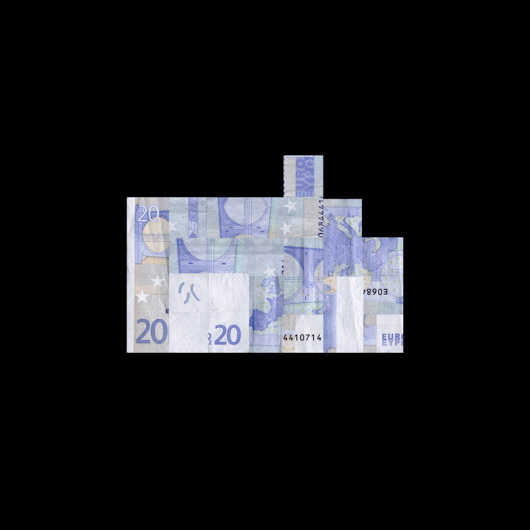
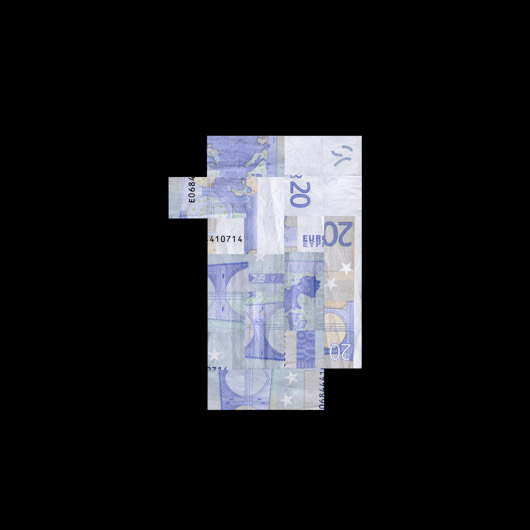
David Fathi took a twenty euro bill and cut it into 28 equal squares, the exact number required to create each 4-square piece of Tetris. He then tried to recreate the rectangle bill, only to realize that it was mathematically impossible to recreate a perfect rectangle out of the unique Tetris shapes.
The problem with Tetris is that in the end, everybody loses.
The Tetris Effect gallery: 4 selected images. Uncaptioned images form part of the visual sequence.